- 07 Oct 2026
- Sayyadharem123@gmail.com
- AI digital, education
- Comments: 0
“Digital Innovation: Powering the Modern World”,
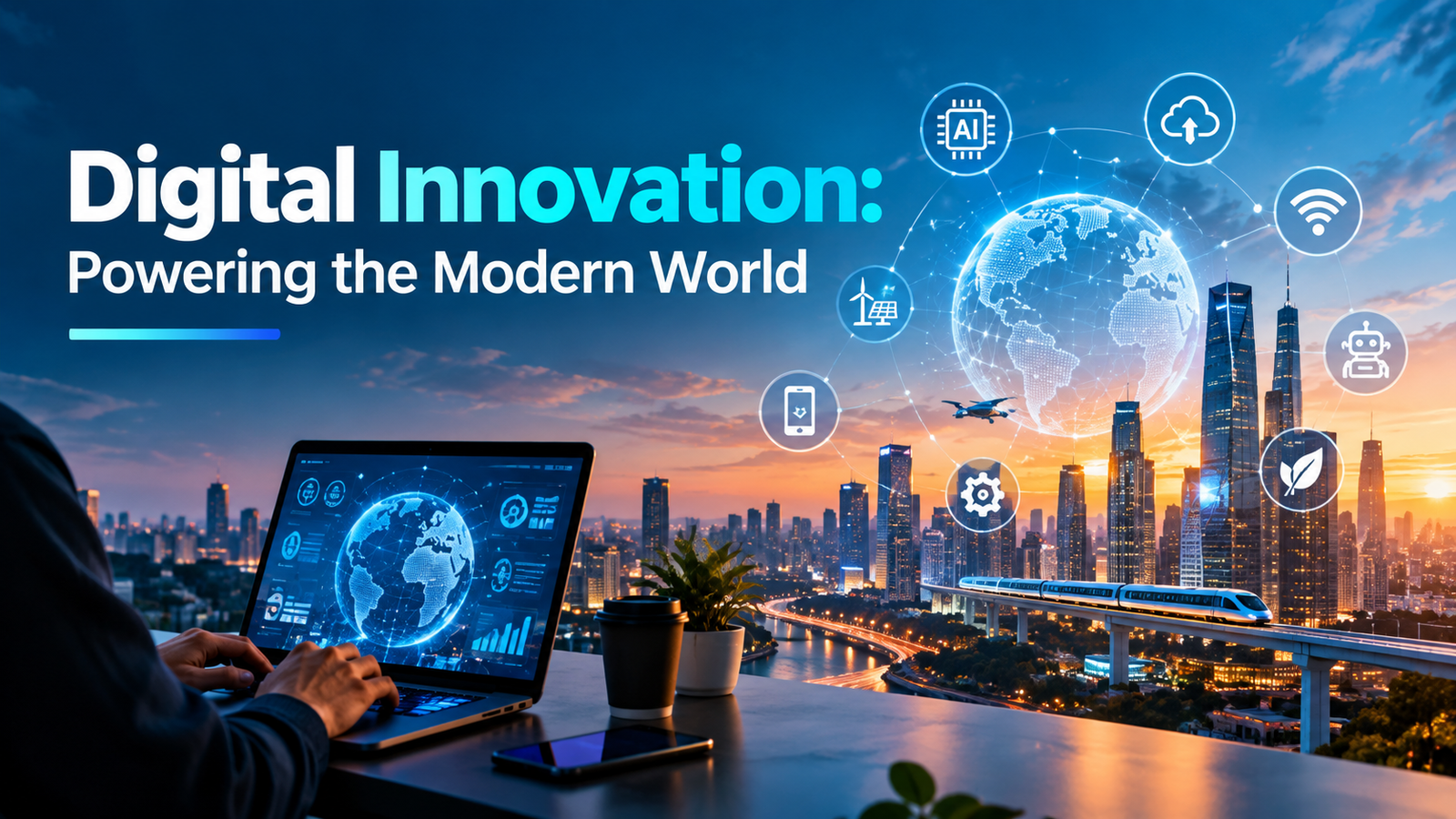
Digital Innovation: Powering the Modern World has become one of the most important forces shaping the way people live, work, communicate, and do business. From artificial intelligence and cloud computing to smartphones, automation, and smart cities, digital technology is changing traditional systems and creating new opportunities. Businesses, governments, educational institutions, and individuals are adopting innovative technologies to improve efficiency, solve problems, and create better experiences.
Digital Innovation: Powering the Modern World Through Technology
Technology is no longer limited to computers and smartphones. It has become an essential part of everyday life. Digital innovation connects people, devices, businesses, and information in ways that were impossible a few decades ago. High-speed internet, cloud platforms, mobile applications, and connected devices allow people to access information and services almost instantly.One of the biggest advantages of modern technology is convenience. Online shopping, digital banking, video conferencing, food delivery applications, and online entertainment have made daily activities faster and easier. These developments demonstrate how Digital Innovation: Powering the Modern World is creating a more connected and convenient society.
The Role of Artificial Intelligence
Artificial intelligence (AI) is one of the most powerful areas of digital innovation. AI systems can analyze large amounts of information, recognize patterns, understand language, and support decision-making. Businesses are using AI for customer service, marketing, data analysis, cybersecurity, and automation.AI-powered tools are also becoming common in education and healthcare. Students can use intelligent learning platforms to receive personalized support, while healthcare professionals can use technology to analyze medical information and improve certain processes.As AI continues to develop, it is expected to influence many industries. Responsible development, human oversight, privacy protection, and ethical use will remain important as organizations adopt these technologies.
Digital Transformation in Business
Businesses are experiencing major changes because of digital transformation. Companies that once depended on traditional processes are now using digital platforms to communicate with customers, manage operations, analyze data, and promote their products.Cloud computing allows businesses to store and access information without depending entirely on physical infrastructure. Digital payment systems make transactions faster, while customer relationship management platforms help companies understand customer needs.For small businesses, technology can provide access to global markets. A company can create an online store, promote products through social media, communicate with customers through messaging platforms, and accept digital payments. This shows how Digital Innovation: Powering the Modern World can create opportunities for businesses of different sizes.
Smart Cities and Connected Communities
Digital technology is also changing the way cities operate. Smart cities use sensors, data platforms, connected infrastructure, and automation to improve transportation, energy management, public safety, and other services.Smart traffic systems can help monitor traffic conditions and improve transportation planning. Connected energy systems can support efficient electricity usage, while digital public services can make government interactions easier for citizens.The development of smart cities demonstrates that Digital Innovation: Powering the Modern World is not only about personal devices. It also involves creating connected environments that can improve the quality and efficiency of urban life.
The Importance of Cybersecurity
As technology becomes more deeply integrated into society, cybersecurity becomes increasingly important. Businesses and individuals store valuable information online, including financial details, personal information, business documents, and account credentials.Cybersecurity technologies help protect systems from unauthorized access, malware, phishing, data theft, and other online threats. Strong passwords, multi-factor authentication, software updates, secure networks, and employee awareness can all contribute to better digital security.Organizations must treat cybersecurity as an ongoing responsibility. Innovation should not only focus on developing new technologies but also on protecting the people and information that depend on them.
Digital Innovation in Education
Education has also been transformed by technology. Online classrooms, digital libraries, educational applications, interactive courses, and virtual learning platforms have expanded access to knowledge.Students can learn from teachers and experts located in different parts of the world. Digital resources also allow learners to study at their own pace and explore subjects beyond traditional classroom materials.Teachers can use presentations, videos, interactive quizzes, and educational software to create engaging learning experiences. In this way, Digital Innovation: Powering the Modern World is helping education become more flexible, accessible, and technology-driven.
The Future of Digital Innovation
The future of digital technology is likely to bring even greater changes. Emerging technologies such as advanced artificial intelligence, robotics, the Internet of Things, augmented reality, virtual reality, blockchain, and next-generation connectivity could influence how people work and communicate.The Internet of Things, for example, connects everyday devices to networks so they can collect and exchange information. Smart watches, connected home appliances, vehicles, and industrial machines are examples of this growing ecosystem.At the same time, organizations will need to focus on responsible innovation. Technology should be designed with security, accessibility, privacy, sustainability, and human needs in mind.
Benefits of Digital Innovation
There are several major benefits associated with modern digital innovation:
1. Greater efficiency ;
Automation can reduce repetitive tasks and save valuable time
2. Better communication:
Digital platforms allow people to communicate instantly across distances.
3. Improved accessibility:
Online services make information and resources available to more people.
4. Business growth
Digital platforms allow companies to reach wider audiences and new markets.
5. Better decision-making
Data analytics can help organizations understand trends and make informed decisions.
6. Personalized experiences:
AI and data-driven systems can provide services tailored to individual needs.